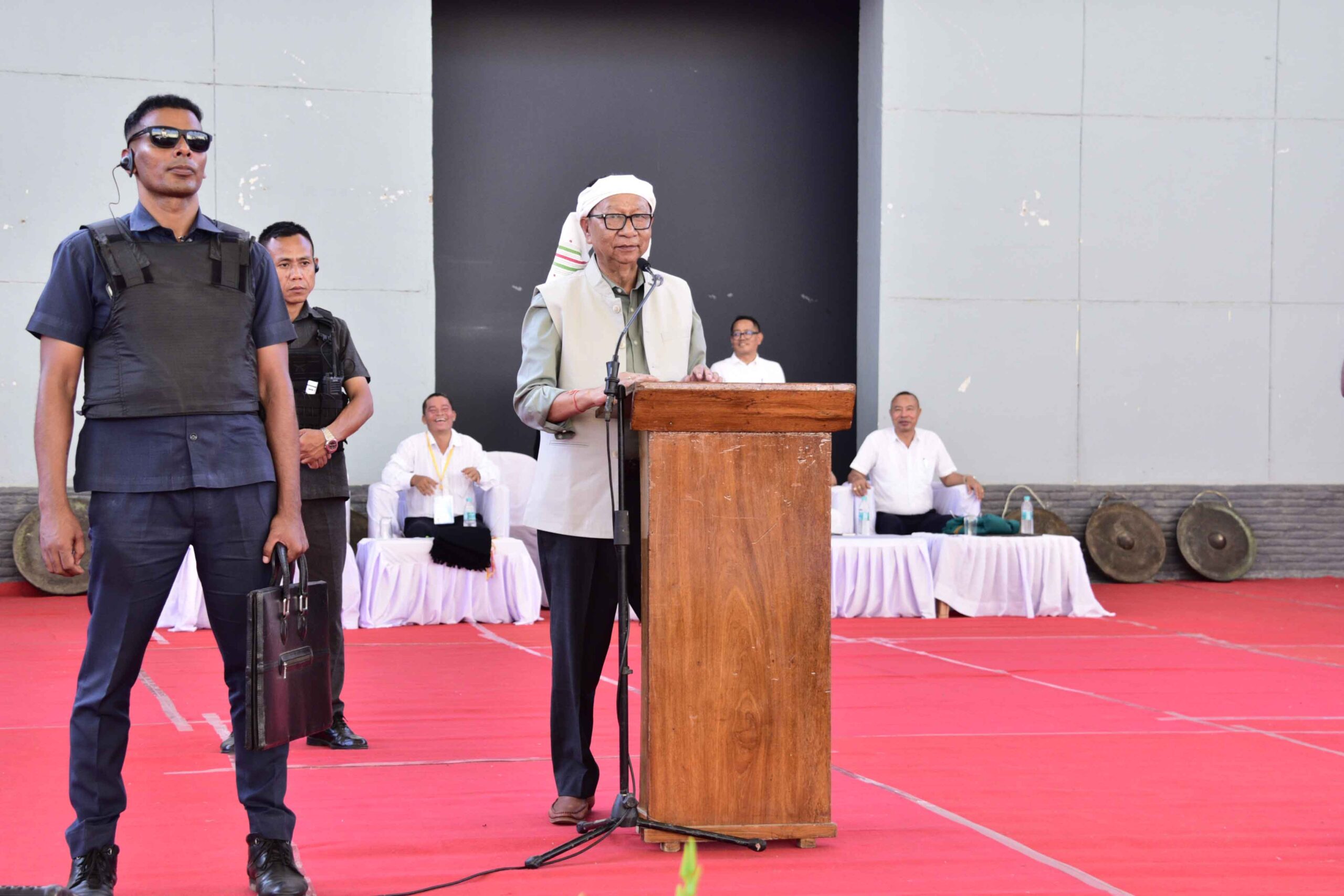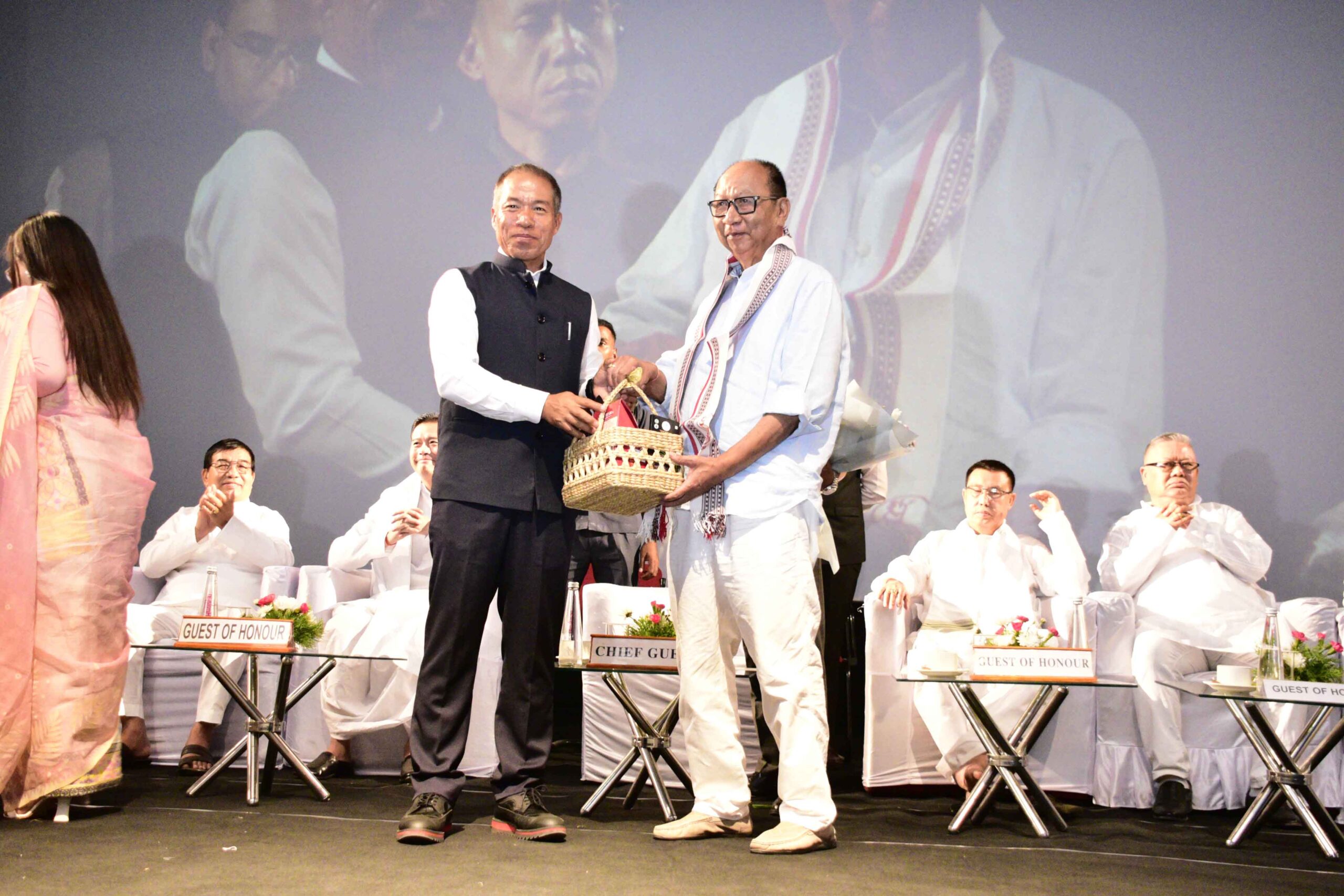

Imphal: Chief Minister Yumnam Khemchand Singh today attended the PM Kisan Utsav Diwas, organised on the occasion of the release of the 24th instalment of PM-KISAN Samman Nidhi by Prime Minister Shri Narendra Modi, held at Gujarat.
The Prime Minister released more than ₹18,690 crore as Samman Rashi to over 9.34 crore farmers across the country through the 24th instalment of PM-KISAN Samman Nidhi (August–November 2026). He also dedicated 521 units developed under the Agriculture Infrastructure Fund and inaugurated 12 Horticulture Clusters.
Addressing the gathering at the Manipur State Film Development Society (MSFDS), Imphal, the Chief Minister said that Manipur’s economy had suffered considerably due to the unprecedented crisis in the State, with the revenue sector, including GST collections, also being adversely affected. He observed that agriculture remained one of the strongest pillars of Manipur’s economy and play a crucial role in reviving economic activities and generating income.
He said that before the crisis, the State’s economy was supported by several sectors, including agriculture, horticulture, handloom and handicrafts, and tourism. However, the prevailing situation had brought considerable hardships to people, with daily wage earners and those dependent on their daily livelihoods bearing the greatest burden.
The Chief Minister stressed that developing the agriculture sector and enhancing its contribution to the State’s economy would require collective commitment and sincerity at every level. He said that the officers, along with those working directly in the fields, must discharge their respective responsibilities with dedication to achieve better progress.
Highlighting the need to increase agricultural productivity, the Chief Minister observed that farmers in Manipur had traditionally practised single-crop cultivation, leaving agricultural fields unused for nearly six months in many parts of the State. He urged the Agriculture Department to work towards making double cropping possible across all agricultural areas, thereby ensuring better utilisation of land and increasing farmers’ income. He also acknowledged the steps being taken by the Horticulture Department in this regard.
On organic farming, the Chief Minister stated that the Agriculture Department had successfully undertaken organic cultivation across 400 hectares in the previous phase, while another 400 hectares had been targeted for the current year. He emphasised that organic farming should be promoted further, considering its potential to create greater economic opportunities for farmers.
He further pointed out that organic cultivation involved greater time, effort and care, and therefore, farmers must be assured of better market access and remunerative returns. Observing that an increasing section of middle- and upper-income consumers was shifting towards organic products, he suggested that the Agriculture Department should focus on establishing more dedicated organic product outlets across the State. He expressed confidence that expanding such outlets would create a reliable market for locally produced organic goods, encourage more farmers to take up organic cultivation and generate additional revenue for the State.
During the programme, financial assistance and other benefits were distributed to farmers and farmer groups under various schemes. These included financial assistance of ₹60,000 each for the purchase of water pumps under the Sub-Mission on Agricultural Mechanization (SMAM); ₹50,000 per unit for the construction of vermicompost units under Rashtriya Krishi Vikas Yojana (RKVY); and ₹1 lakh each for the installation of mini oil mills under the National Mission on Edible Oils–Oilseeds (NMEO-OS).
Mustard oilseeds and bee boxes were also distributed to farmer groups under NMEO-OS for the Rabi season, while pea and gram seeds were provided to farmer groups under the Pulse Mission. Subsidised knapsack sprayers were also distributed under SMAM.
14,740 farmers from Manipur received financial assistance amounting to ₹2.95 crore, today.
The programme was attended by MLAs, dignitaries, senior officials of the Agriculture Department and a large number of farmers from different parts of the State.