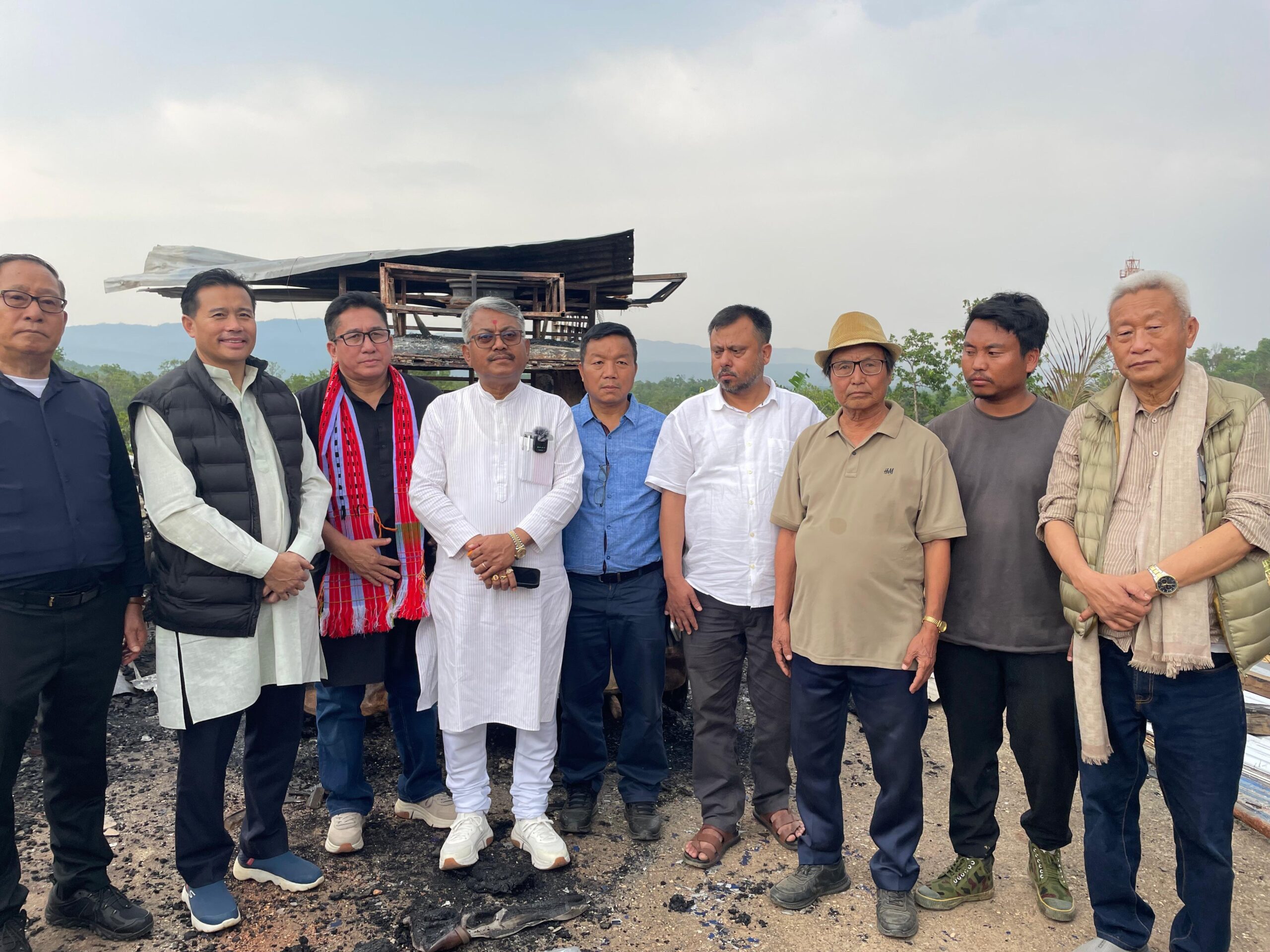

Imphal: In the remote eastern edge of Manipur, far beyond the political conversations of Imphal, three villages — Namlee, Wanglee Market, and Choro Z — have become symbols of a deeper crisis unfolding along India’s troubled border with Myanmar. The recent attacks on these villages in Kamjong district have raised troubling questions about governance, security, and the State’s commitment to protecting some of its most isolated citizens.
A forgotten frontier
Kamjong district, bordering Myanmar’s volatile Kabaw Valley, remains one of the least developed and most neglected regions of Manipur. Vast in geographical size — several times larger than the Imphal Valley — the district has only one representative in the Manipur Legislative Assembly under the Phungyar constituency. For years, residents of the region have complained of administrative neglect, weak infrastructure, and inadequate security despite living along one of India’s most sensitive international borders. Those concerns erupted into national attention after armed groups allegedly crossed over from Myanmar and attacked the three Tangkhul-inhabited villages.
Conflicting narratives
Following the violence, local MLA Leishiyo Keishing of the Naga People’s Front (NPF) described the incident as an act of “foreign aggression,” claiming that Myanmar-based armed groups, particularly the KNA (B) and the People’s Defence Force (PDF), were responsible. These groups are known to operate in Myanmar’s conflict-ridden border regions, where resistance militias continue to fight the military junta. However, Manipur Home Minister Govindas Konthoujam publicly rejected the characterization of the attack as foreign aggression during his visit to Choro village. His statement immediately sparked controversy and confusion among local residents and observers. The contradiction between the MLA’s claim and the State government’s official position has intensified public suspicion over what truly happened in the border villages.
Questions over security response
Several troubling questions remain unanswered. Residents and local sources allege that the attackers specifically targeted houses belonging to members of the Tangkhul community. Reports also emerged of the abduction of a Tangkhul woman from Namlee village. What raised further eyebrows was the Home Minister’s assertion that the abducted woman would soon be released — a statement made even before official clarity emerged regarding the identity of the abductors. While national daily The Hindu reported that KNA (B) cadres were involved, the Assam Rifles, in its official communication, referred only to “extremist groups operating in the region.” The differing narratives have led villagers to question whether authorities possessed prior knowledge about the perpetrators and the unfolding situation.
Allegations against Assam Rifles
Perhaps the most sensitive and controversial issue concerns allegations surrounding the role of the Assam Rifles. Villagers claim that an Assam Rifles column had passed through the affected villages only hours before the attacks occurred. More critically, a camp of the paramilitary force is reportedly located just a few hundred metres from Choro village — the settlement that suffered the worst destruction during the arson. Residents have questioned why security personnel failed to intervene in time despite their close proximity. These allegations remain unverified, but they have deepened mistrust among local communities already living under constant insecurity along the Indo-Myanmar frontier.
A border under pressure
The incident has once again exposed the fragile security architecture along Manipur’s eastern border. For years, concerns have persisted regarding alleged encroachments and the shifting of boundary pillars along the Indo-Myanmar border. Yet local residents argue that both State and Central authorities have failed to establish an effective and consistent security presence in these remote frontier regions. Critics say the attacks reveal not merely a law-and-order failure, but a broader collapse of administrative attention toward border communities that often feel politically invisible.
Growing ethnic tensions
The violence also unfolds against the backdrop of Manipur’s deeply fractured ethnic landscape, where mistrust among Meitei, Naga, and Kuki communities continues to widen amid ongoing unrest in the State. Many in the region fear that armed conflict spilling over from Myanmar, combined with local ethnic polarization, could further destabilize an already volatile situation. Security analysts warn that unless the Government of India adopts a transparent and balanced approach toward the border crisis, the situation could escalate beyond immediate control. For the residents of Namlee, Wanglee, and Choro Z, however, the larger geopolitical debates matter less than the immediate reality they now face: burned homes, insecurity, and a growing belief that the State failed to protect them when it mattered most.