
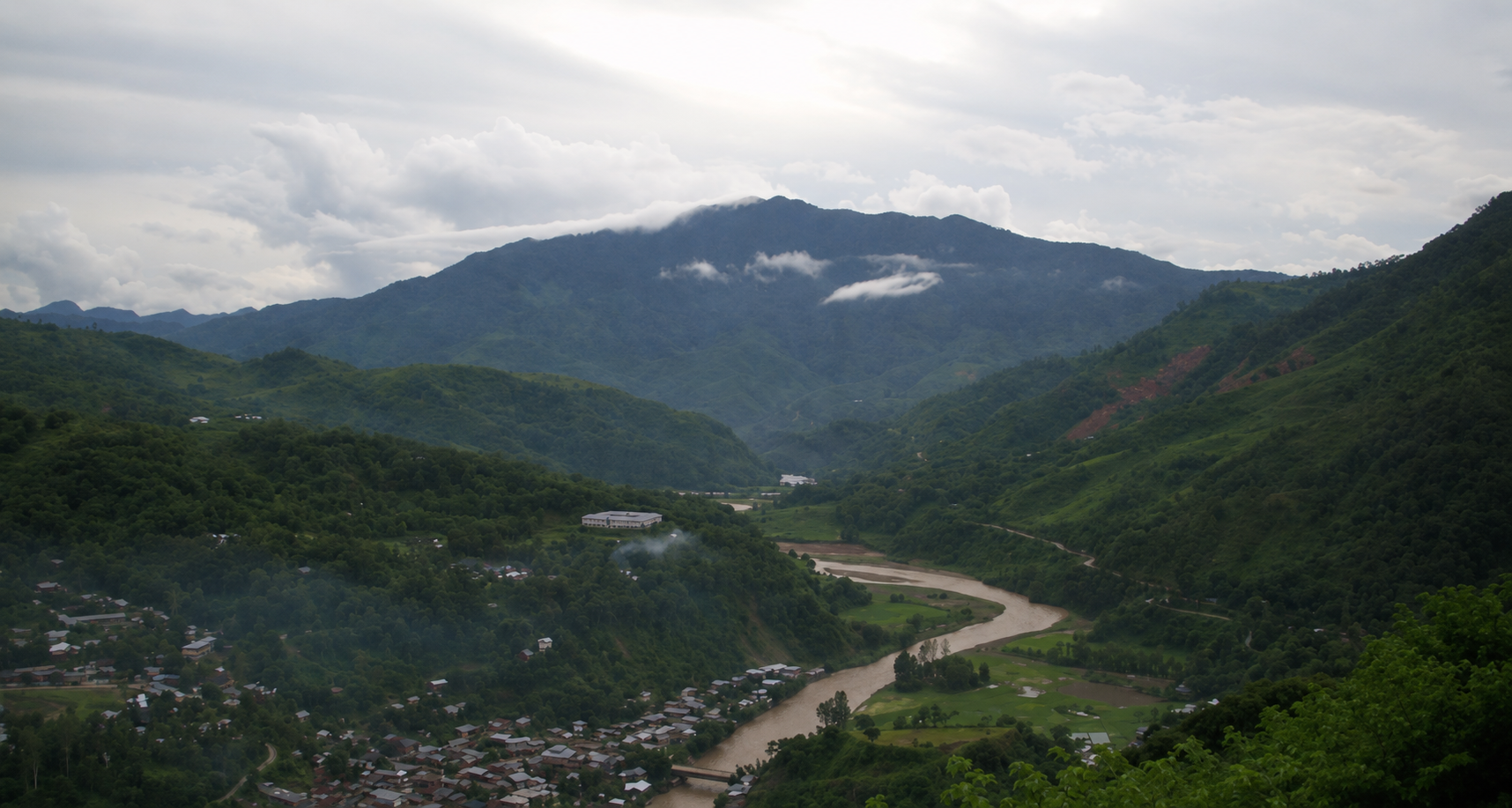
Imphal: The road to Noney does not arrive so much as negotiate — climbing through betel-nut groves, doubling back along ridgelines the colour of wet tea, before dropping into the Irang valley, where the river moves the way news moves through a small place: slowly, then all at once, until everyone has heard.
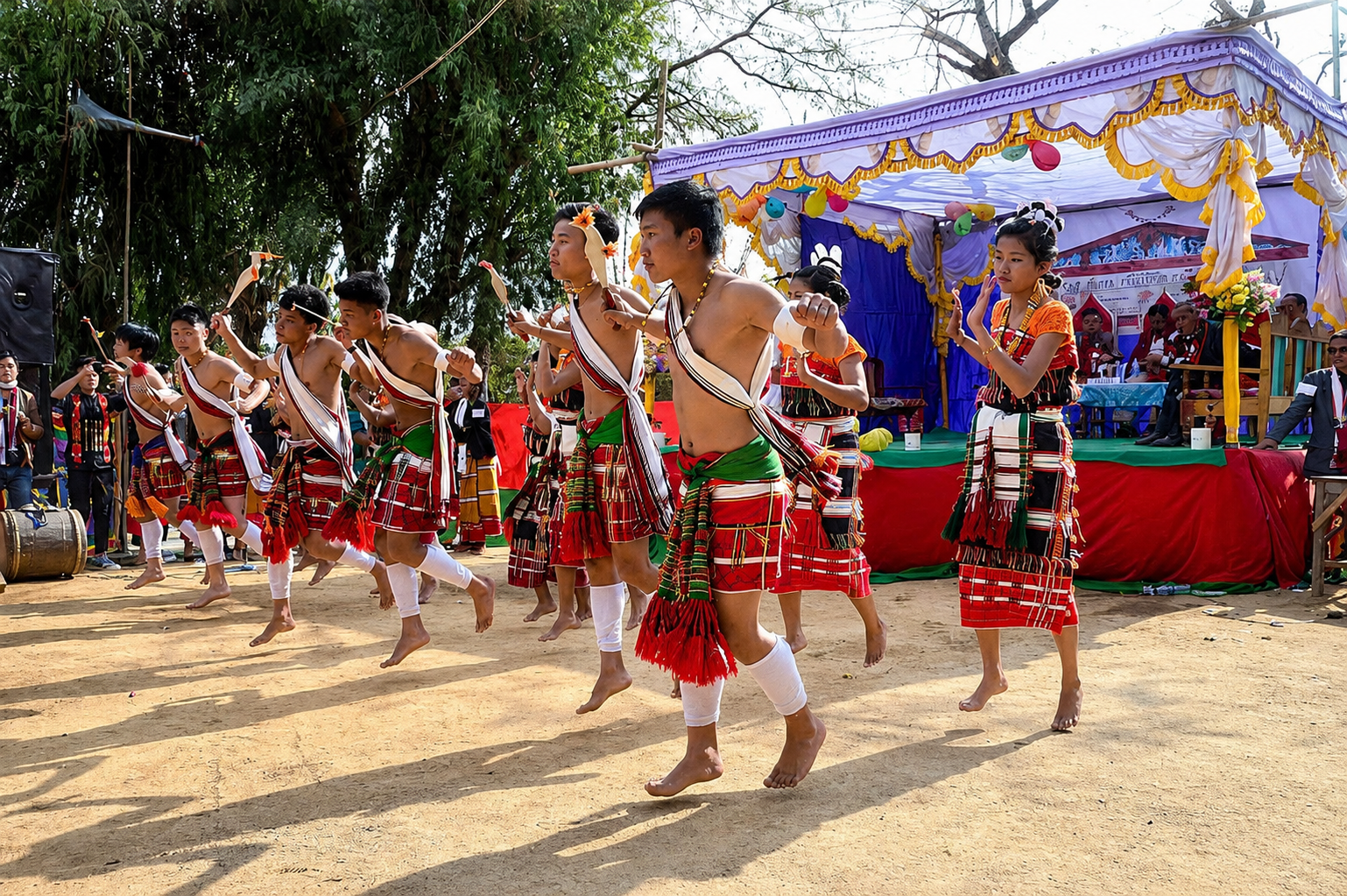
There is no stadium floodlight for a hundred kilometres in any direction. There is, instead, a kind of light the Zeliangrongpui people have always trusted more — the one they carry into the fields every December for Gaan-Ngai, marking the old year’s dying and the new one’s homecoming, lit by fire, because darkness here is only ever a temporary arrangement.
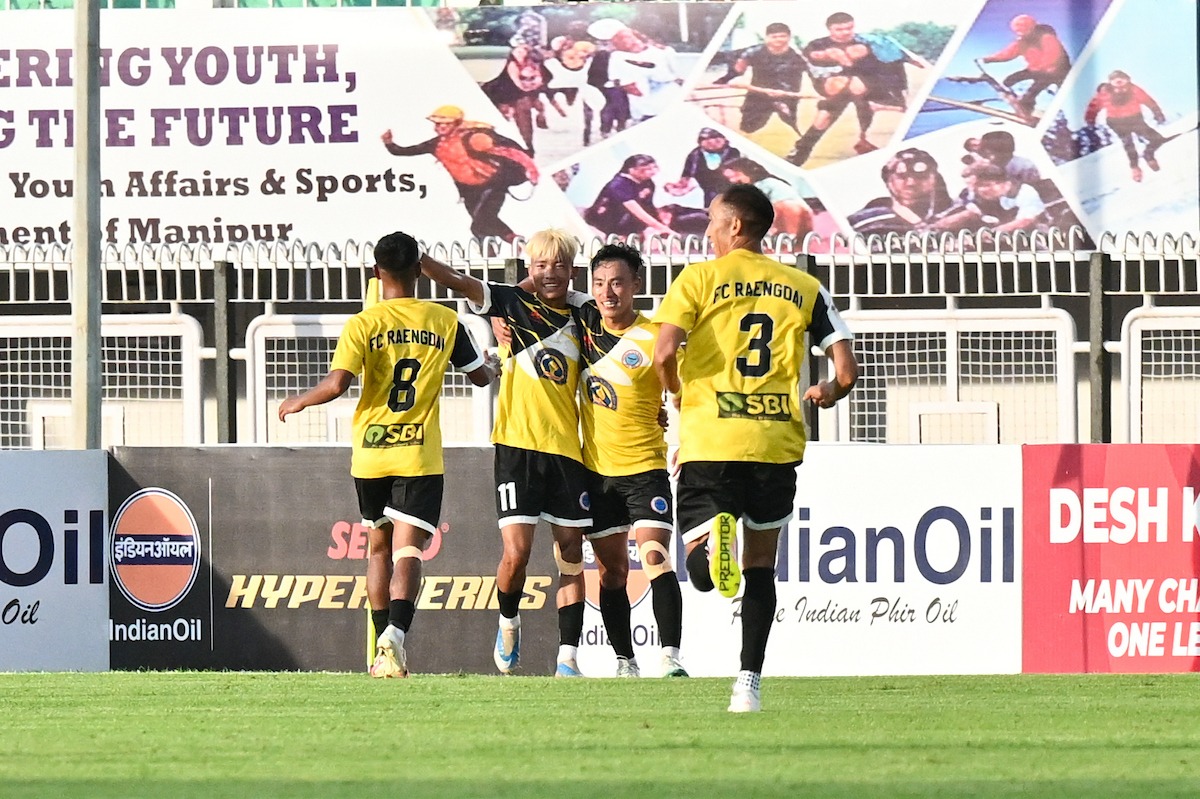
FC Raengdai, a club not yet four years old, is now three days into its first-ever Durand Cup campaign, and it was built on exactly that belief. On Thursday, at the Khuman Lampak Main Stadium in Imphal, the light arrived on schedule.
A hillside that produces footballers
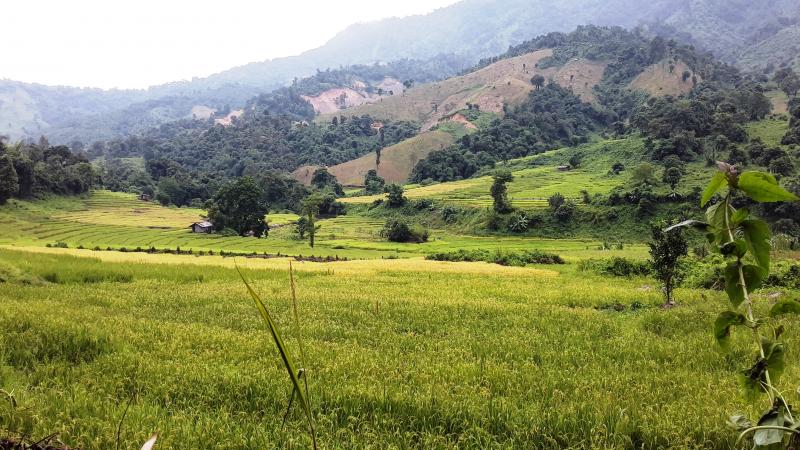
Noney does not look, on paper, like a place that produces them. Rainfall statistics, jhum cultivation, a population spread thin across 1,438 square kilometres of Manipur’s western hills, Rongmei Naga villages stitched together by roads that a bus can only apologise its way along.
Paper has never understood what a ball does to a hillside, though. Give children in Khoupum valley a flat forty metres of paddy field once the harvest is in, and they will not see mud. They will see a pitch.
Tingkaochun Gangmei grew up on exactly that kind of ground — playing with friends after school, then for his school team, then in the Reliance Foundation Youth League at Under-15 level. It is the sort of ladder that usually ends quietly in the hills, unheard of beyond them.
“My football journey started on the local grounds in Khoupum Valley, where I spent most of my childhood playing with friends after school,” he says. “Those small grounds are where I first fell in love with the game.” Joining FC Raengdai in 2023, his first senior club, was the turning point, the club he rode from the Manipur Premier League into the I-League 3, and now into a tournament he never imagined watching as a boy, let alone playing in.
A bird that only comes with good news
The club itself is younger than some of the boys who wear its shirt. It was founded in November 2022, in a function hall in Imphal, and its General Secretary, Napoleon Rongmei, tells the story plainly: Noney and Tamenglong never lacked football talent, only somewhere for it to go. Clubs had existed before, usually built for a single district tournament and gone soon after. This one was meant to last.
Even the name was chosen for permanence. Raengdai is the Zeliangrongpui word for the hornbill, a bird that carries far more weight here than its wingspan suggests. “The Hornbill represents leadership, loyalty, courage, and unity,” Rongmei says, “qualities that we wanted our football club to embody both on and off the pitch.” Its arrival, in local belief, signals a good harvest on its way. A club named for a bird that only shows up when better things are coming has set itself a fairly specific standard to live up to.
Building without shortcuts
It grew the way most things do in these hills, slowly, then suddenly. A Manipur Premier League title. Qualification, at the first attempt, to the I-League 3, a season head coach Birbal Singh Kshetrimayum remembers as one nobody outside the group expected much from: a new club, a limited budget, a very young squad, many of them experiencing that level of football for the first time. What he saw from the dugout, he says, was honesty and discipline shown up every single day, regardless of the scoreline.
That campaign ended in May with something no one had dared write down as a plan — runners-up, pipped to the title only on head-to-head record, and promoted, the first tribal club from Manipur ever to reach I-League 2.
Birbal Singh built that squad without shortcuts. It was never about where a player came from, he says, but who they were – discipline, attitude, hunger, a willingness to commit to how Raengdai wanted to play. He could have brought in foreign players for a quick run at this tournament. He didn’t, choosing instead an Indian core that could grow together toward I-League 2 rather than a squad assembled for one campaign alone. Football, in his view, has always had the power to bring people together in Manipur — in difficult times especially, the game gives people hope and pulls communities past their differences.
Fifty-seven minutes
Then came the Durand Cup itself — the oldest football tournament in Asia, the third-oldest on the planet, a competition that has outlasted empires simply by continuing to kick off. Raengdai entered as debutants, drawn in Group D alongside TRAU FC, NEROCA FC and the Indian Navy, their opening match set for Imphal. For once, the mountain didn’t have to travel to the tournament.
For fifty-seven minutes on Thursday, it held its ground instead. Indian Navy — last year’s quarter-finalists, fielding a lineup carrying the scars and medals of ISL and I-League careers — probed and found, again and again, a young Raengdai side that refused to move, the way a hillside refuses a bad road. Six shots apiece by the interval, nothing to separate them.
At half-time, Kshetrimayum’s message to the group was uncomplicated: the match would be won by all twenty-one players, not the eleven who’d started it. The double substitution that followed — Laishram Bikramjit Singh and Khaidem Amarjit Singh, sent on together — read less like a change of personnel than fresh legs for a plan the coach had no intention of abandoning.
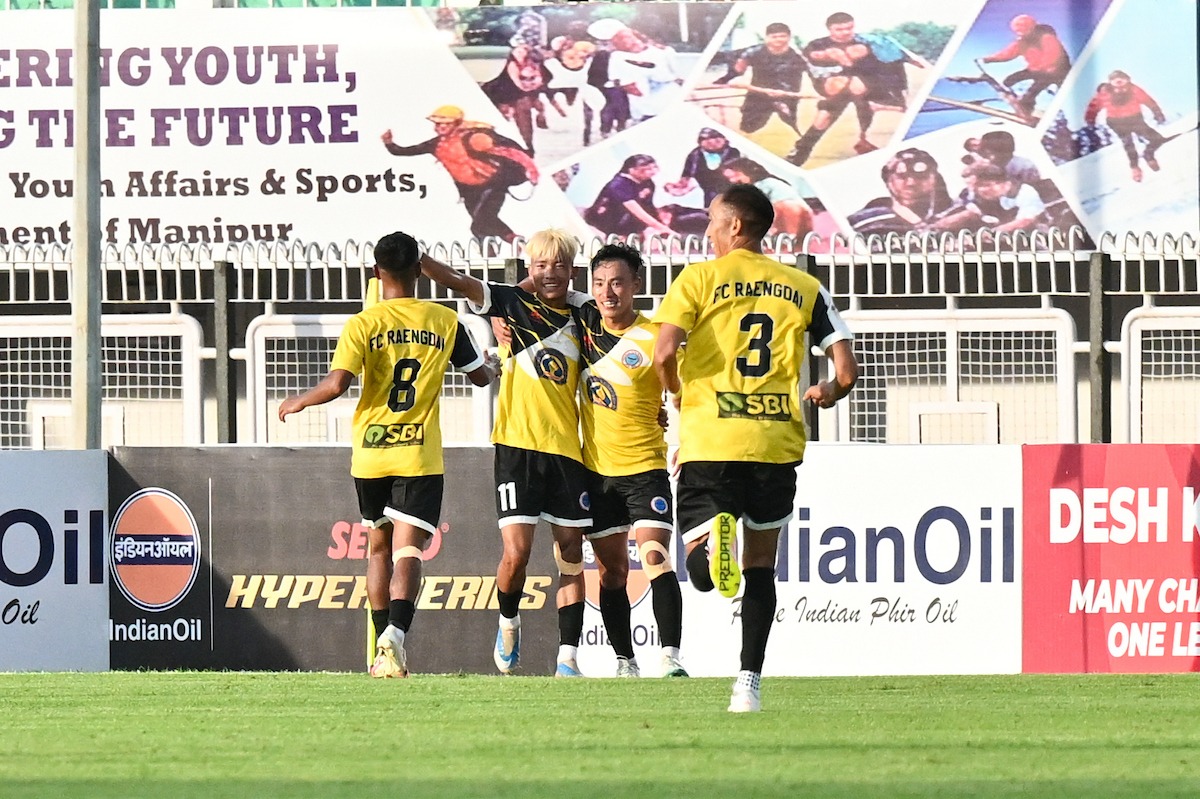
It worked in the 58th minute. Mridul Doley pressed high, won the ball clean off Navy’s last defender, and drove into the box, where the advancing goalkeeper committed to a challenge, he had no business making. “I saw the opportunity to press high, won the ball, and immediately drove towards goal,” Doley remembers. “My first thought was to finish it myself, but my final touch wasn’t as clean as I’d have liked. Luckily, Amarjit had made the perfect run and was on my right side — he was in exactly the right place at the right time and calmly finished into the empty net.”
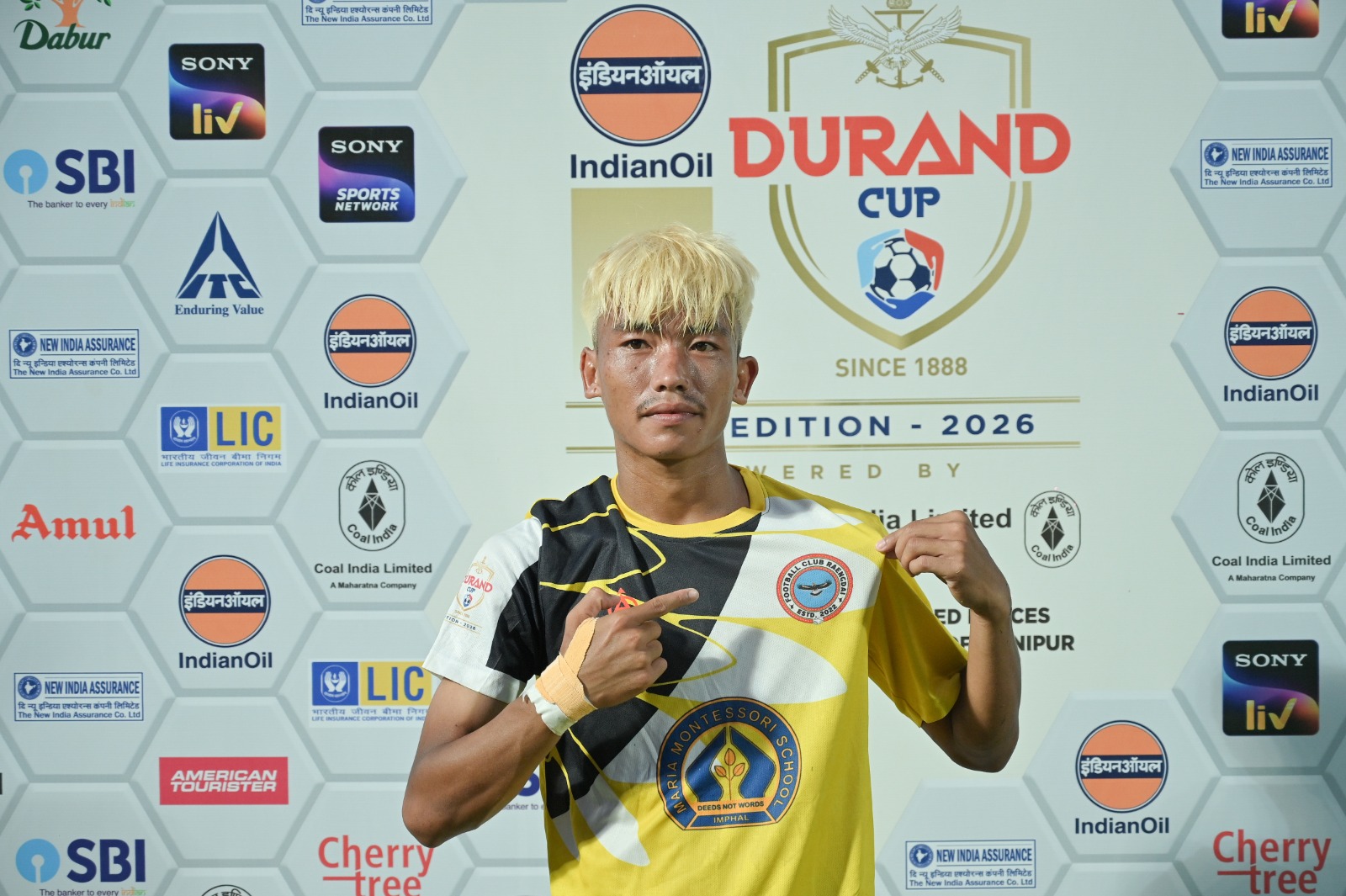
It was his first senior goal on this stage, and FC Raengdai’s first Durand Cup goal, arriving at the same moment. “This is definitely one of the biggest moments of my career so far,” Doley says. “It was my first time playing in the Durand Cup, and it’s also FC Raengdai’s first appearance in the tournament, so it makes the moment even more special.”
The houses that watched from home
Nearly eighteen thousand people had filled Khuman Lampak that evening — the biggest crowd Gangmei says he has ever played in front of, and one his side sent home satisfied.
Rongmei watched the same match as the club’s General Secretary rather than a supporter, and allowed himself pride, carefully measured. “Indian Navy are a very strong side and were quarter-finalists in last year’s Durand Cup, so beating them was a proud achievement for our young team,” he says. “At the same time, we have the highest respect for the Indian Armed Forces, and are grateful to the Durand Cup for giving clubs like ours the opportunity to compete on such a prestigious stage.”
Not everyone who cared could be inside the stadium. In Khoupum, Gangmei’s family watched on a phone screen instead. “We as a family came together in prayers, with words of encouragement to do his best in every match,” they say — a family that once tried, more than once, to steer their only son away from football, and eventually lost that argument with grace.
Elsewhere in the district, the parents of another young Raengdai player, Gaisuangmei Kamei, describe a harder version of the same negotiation. “In a typical Rongmei Naga family, football is rarely considered a viable career option,” his father says. “Letting my son become a footballer was one of the hardest decisions my family ever made — we sacrificed his formal education, family time, fellowship, and to some extent, money.” There were quieter doubts too, about temperament, about whether a short fuse could ever sit comfortably alongside the discipline the game demands. This time, unlike the Gangmeis, they were in the stadium themselves. “We completely outperformed the Indian Navy team,” his father says, “even though we only managed to score one goal. Still, securing three points on the table is a great result” — as fair a scouting report as any coach could give, from a man whose real interest was never the tactics, only his son.
What the win actually carries
What Raengdai has become, almost without meaning to, is a kind of translation — carrying something the Zeliangrongpui community already knew about itself into a language the rest of the country happens to watch on television. In under four years, the club has given the region a reason to gather around a single, shared hope, the way it once gathered around a single fire every December.
Rongmei feels that shift even in the club’s reach beyond Manipur. A much wider audience now knows Raengdai’s story, he says, with interest building not only across India but in neighbouring countries too.
Monday comes quickly
There is no time to sit with any of this, which is perhaps the truest thing anyone can tell you about football at this level. On Monday, TRAU FC arrive at Khuman Lampak — a Manipur derby inside a Durand Cup group stage, the kind of fixture once settled in front of a few hundred people on a state-league Sunday and now watched far beyond Imphal.
Kshetrimayum is already bracing his squad for the noise of it. A derby is always different, he says — the crowd alone creates a pressure no tactical plan fully prepares for, though his players now know roughly what nearly eighteen thousand voices sound like. His message stays the same regardless of opponent: stay mentally strong, trust the way the team plays, don’t lose sight of what’s at stake.
So when the whistle goes again and a team from a district of fewer than fifty-three thousand people lines up under lights brighter than anything Noney’s own hills have ever offered, it is worth remembering what was actually decided on Thursday. Not three points. A community that has spent generations introducing itself to others — explaining its language, its festivals, its own name — got to spend one evening needing no introduction at all.
Whatever happens against TRAU, Raengdai have already won the only contest that mattered when they were founded three Novembers ago: the right to be seen, in full colour, by a country that had barely learned to spell Noney. That contest was settled the moment Khaidem Amarjit Singh’s shot crossed the line at Khuman Lampak. Everything from here is simply the follow-through.
There is a reason this club took its name from a bird that only ever arrives when the harvest is good, when better times are on their way. The Durand Cup has survived a hundred and thirty-eight years by doing exactly one thing — making room, edition after edition, for whoever is ready to carry the game forward next. This year, quietly, without asking anyone’s permission, the hornbill flew down from the hills and landed in Imphal.
It has not so much as folded its wings yet.