
Imphal: An extinct bamboo species has received a renewed chance of revival following a major scientific breakthrough by the Department of Life Sciences (Botany), Manipur University.
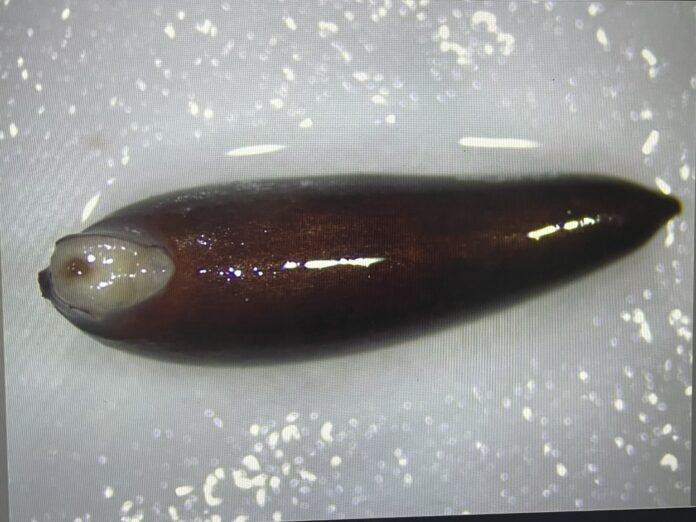
Researchers have successfully traced the seeds of Arundinaria maling Gamble – a rare, narrow, cold-hardy, sub-alpine bamboo species preserved for the past two decades in a cryogenic tank at –196°C at the National Bureau of Plant Genetic Resources (NBPGR), New Delhi.
Arundinaria maling is globally unique and has been famously described as “The Lone Ranger” in the world of bamboo for occupying a highly specialized ecological niche beyond the timberline in the sub-alpine zone of the Eastern Himalayas. Locally known as “Rui,” the species once played a vital role in the livelihood and cultural practices of the Monpa tribe inhabiting the temperate and alpine regions of Bomdila and Tawang districts of Arunachal Pradesh. Its diverse uses ranged from household materials and firewood to edible tender shoots, religio-spiritual practices, ethnobotanical applications, and traditional hill farming systems.
The only known extensive natural forest patch of this species spanning nearly 3,000 hectares was scientifically documented at Jang area – the battlefield of 1962 Indo-China war during surveys in western Arunachal Pradesh in 2000 by a pioneering bamboo researcher from the North Eastern Regional Institute of Science & Technology (NERIST), Prof. Kshetrimayum Lal Bihari of Life Science department, (Botanty), Manipur University said.
Historical records, however, highlight the species’ vulnerability. As early as 1904, J.S. Gamble, the taxonomic authority of A. maling, reported gregarious flowering followed by mass death without natural regeneration in sub-alpine pockets of Mt. Tonglo in Sikkim. Similar mass flowering events without regeneration were later reported by P.K. Ray and H. Hara during 1952–1960 in Kurseong and Darjeeling.
The rediscovery of A. maling in Arunachal Pradesh in 2001 marked the last known natural population of the species on earth. Tragically, another episode of gregarious flowering between 2004 and 2006 led to the complete devastation of this unique forest patch, effectively wiping out the species from its natural habitat. Subsequent scientific studies on the collected seeds in 2006 revealed promising results, with 95% viability and 76% germination under laboratory conditions. To safeguard this genetic resource, the seeds were deposited for long-term cryopreservation at NBPGR, New Delhi, through its regional station at Umiam, Meghalaya.
Now, in a significant step towards species recovery, the Department of Life Sciences (Botany), Manipur University has initiated efforts to regenerate Arundinaria maling along with few other bamboo species of Indo-Burma and Eastern Himalaya Biodiversity Hotspot which are currently under bloom using advanced tissue culture techniques for mass propagation. The long-term goal is to reintroduce the species into its native habitats and subsequently establish them in similar ecological niches in Manipur as a second home.
This ambitious conservation initiative is being carried out under the leadership of Dr. Kshetrimayum Lal Bihari, A Professor of the Department of Life Sciences (Botany) with financial support from the Department of Biotechnology, Government of India, offering new ray of hope for the revival of one of the world’s rarest bamboo species and many more for the rest species under full bloom.
The team extended heartfelt gratitude Dr. Anju Mahendru Singh, Head, Division of Germplasm Conservation; Dr. Vartika Srivastava, Senior Scientist, Curator-Cryobank, Division of Germplasm Conservation and Dr. Puran Chandra, Senior Scientist, Germplasm Exchange and Policy Unit, ICAR-NBPGR, New Delhi for their efforts to keep the material safe for the last two decades.