
Kangpokpi: The District Administration, Kangpokpi, has successfully concluded the three-day “Jan Kalyan Shivir” a public welfare camp campaign across all nine Sub-Divisions of the district. Conducted from 17th to 19th June, the initiative aimed to bridge the gap between intended beneficiaries and the various welfare schemes of the Central and State Governments, ensuring that every eligible citizen has access to essential services and benefits.
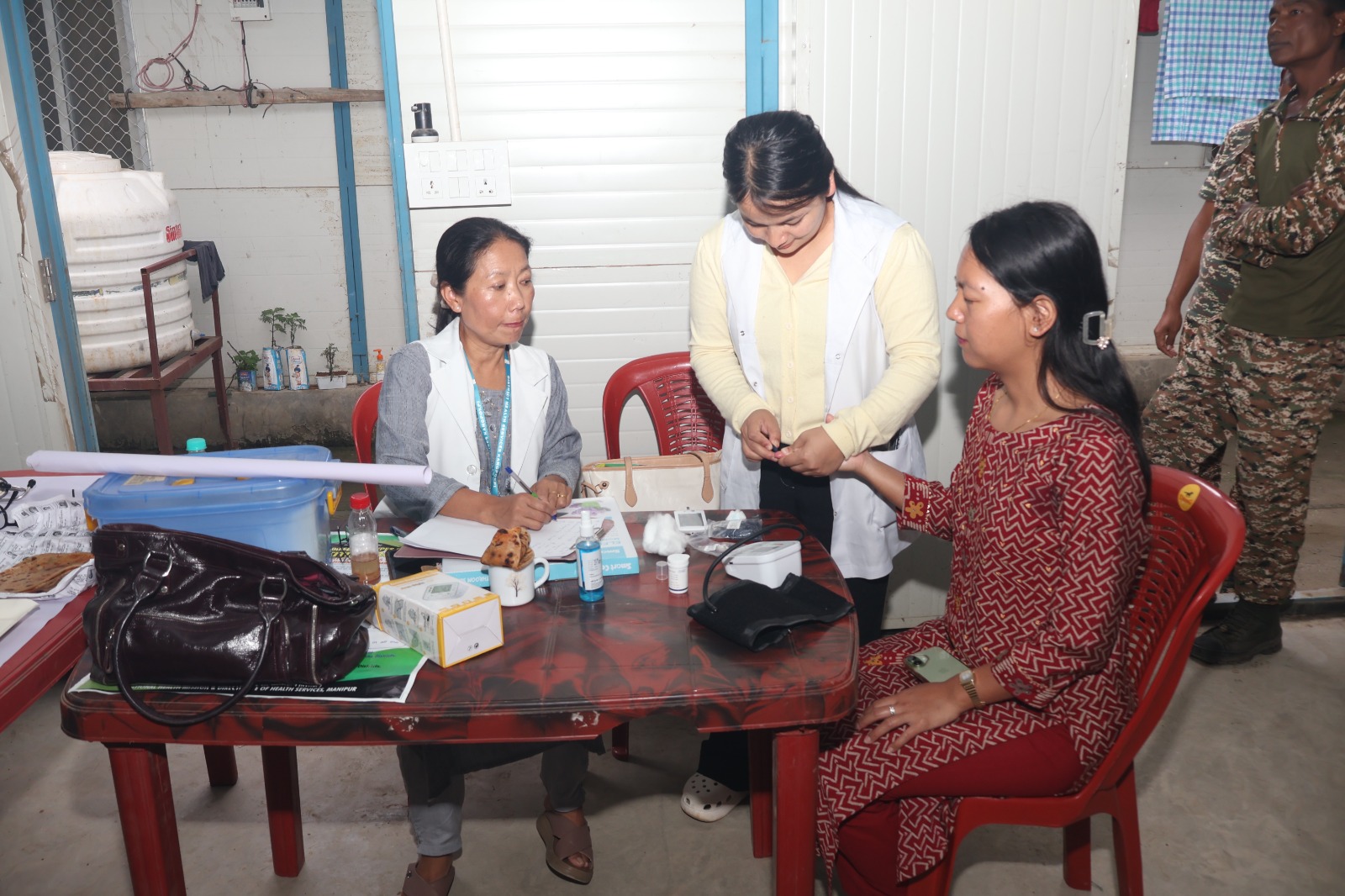
Key components of the programme included awareness sessions on government welfare schemes, village-level meetings and outreach activities, health screening camps, entitlement and service delivery camps, among others. This included facilitating enrollments for health and social security benefits like Ayushman Bharat (PM-JAY), CMHT, and various PM pension and insurance plans, alongside agricultural support through PM-Kisan, Kisan Credit Cards, and regional value chain assistance for crops like Kiwi and King Chilli. Additionally, residents were connected with housing and utility services—including PM Awas Yojana, PM Surya Ghar (Solar), and PM Ujjwala Yojana—while local growth was stimulated through livelihood programs such as the Startup Manipur Scheme, PM-Vishwakarma, and PM-SVANidhi street vendor loans.
The welfare campaign was successfully conducted across ten locations—Ramgailong, Nungsai Chiru, Sandangsenba Maring, Kalapahar, Saitu-Gamphazol Office, Saikul SDO Office, Molkon Bazar, T. Waichong Villages, T. Khullen, and the DC Office, Kangpokpi—witnessing an impressive turnout of approximately 20,000 beneficiaries. Various departments actively participated in the camps, delivering essential services and benefits to the public. The Veterinary and Animal Husbandry Department extended assistance to beneficiaries, while the State Bank of India (SBI) facilitated the registration of 15 individuals under social security schemes such as PMSBY, PMJJBY, and SSA, among others. The Zonal Education Office (ZEO) also distributed educational materials to students. The camps primarily focused on creating awareness in remote areas and improving access to government services through activities such as dissemination of scheme information, beneficiary identification, assistance with application and form-filling processes, and health screenings.